

Autoship makes it easier to keep your pet's medications on hand!

Convenience: We contact your vet when it’s time to renew your pet’s prescription.

Reminders: You’ll receive reminders prior to shipping, so you’ll have time to make changes.

Savings: Save on the initial order PLUS 5% on future deliveries.

Flexibility: Easily change, skip, or cancel anytime on your My AutoShip page.

Support: Our customer service team is here to help with any questions or concerns.


1 of 2

![Thyro-L]()
![Thyro-L]()
![Thyro-L]()
Click on image to open expanded view
Item No.
25722
Thyro-L Rx

Size:
You may also like


One-time purchase
$12.99
Product Description
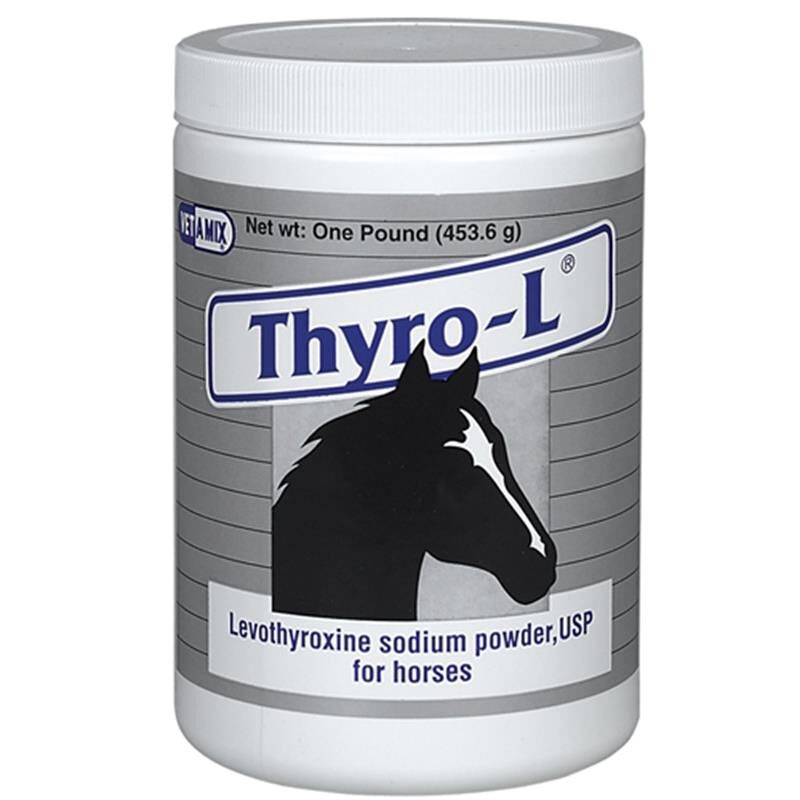
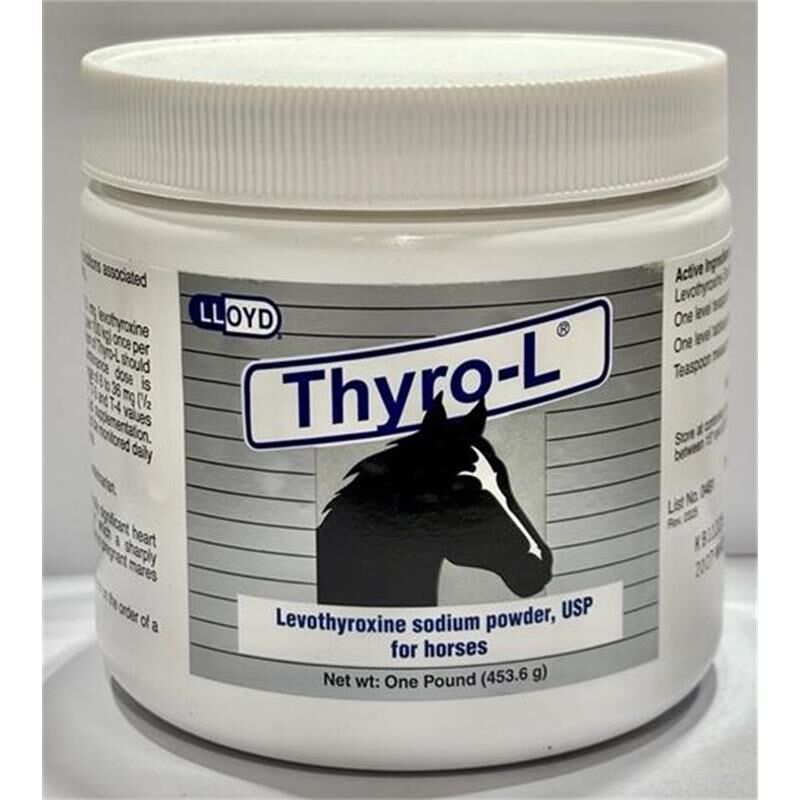
Thyro-L is indicated for use in horses for correction of conditions associated with low circulating thyroid hormone (hypothyroidism).
What is Thyro-L?
Thyro- L is indecated for use in horses for correction of conditions associated with low circulating thyroid hormone (hypothyroidism). Thyro-L can be administered by mixing the daily dose in the concentrate or by top dressing on grain, preferably rolled or ground.
Who is Thyro-L for?
Horses.
Why use Thyro-L?
-For use in horses for correction of conditions associated with low circulating thyroid hormone
Manufacturer:
Lloyd Laboratories Inc
Active Ingredients(s):
Levothyroxine Sodium
How is Thyro-L sold?
453.6 GRAMS
What are the side effects of Thyro-L?
You should see no side effects if given at the correct dosage. If your horse has any abnormal signs, consult your veterinarian. If your horse experiences an allergic reaction to the medication, signs may include facial swelling, hives, scratching, sudden onset of diarrhea, shock, seizures, pale gums, cold limbs, or coma. If you observe any of these signs, contact your veterinarian immediately.
What special precautions are there?
-Note: This product is not FDA-approved.
-KEEP OUT OF THE REACH OF CHILDREN
-Federal law restricts this drug to use by or on the order of a licensed veterinarian.
What to do if overdose?
If overdose contact your nearest pet hospital immediately.
How can I store Thyro-L?
Store at room temperature and protect from light. Avoid excessive heat (104°F).
Helpful Tips:
Administer with caution to animals with clinically significant heart disease, hypertension or other complications for which a sharply increased metabolic rate might prove hazardous. Use in pregnant mares has not been evaluated.
Overview
The suggested initial dose is 0.5 to 3.0 mg levothyroxine sodium (T-4) per 100 pounds of body weight (1 to 6 mg per 100 kg) once per day or in divided doses. Response to the administration of Thyro-L should be evaluated clinically until an adequate maintenance dose is established. In most horses, this is usually in the range of 6 to 36 mg total daily dose of T-4. Serum T-3 and T-4 values can vary greatly among individual horses on thyroid supplementation. Dosages should be individualized and animals should be monitored daily for clinical signs of hyperthyroidism or hypersensitivity.
Main Ingredients
Levothyroxine Sodium
